
Word of the year? No. 'Slop' is an impotent cry of denial
The Picayune Sentinel's word of the year is ...


A reminder that a gift subscription to the award-worthy Picayune Sentinel is a holiday present that keeps on giving — commentary, comedy, quips, tips and tirades delivered twice a week throughout the year. One size fits all. Usually in good taste. Suitable for all cultural celebrations at this time of year.
12-18-2025
This week:
News and Views — Hot takes, fully baked on Trump and ASL; medical aid in dying; Trump’s appalling speech and Hegseth’s refusal to release the war-crime video
That’s so Brandon! — Updates on the misadventures of Chicago’s maladroit mayor
Land of Linkin’ — Where I tell readers where to go
Squaring up the news — Where Charlie Meyerson tells readers where to go
Land of Linkin’ extra — Reactions to Trump’s post about the Reiner murders
Media notes — A hat tip to a lively, vital issue of the Sunday Sun-Times
Quotables — A collection of compelling, sometimes appalling passages I’ve encountered lately
The season finale of ‘Cheer Chat’ posts — Mary Schmich looks back at a wonderful run of “Songs of Good Cheer”
Quips — The winning visual jokes and this week’s contest finalists
Green Light — “We Need a Little Christmas,” a 59-year-old song for today
Mistakes were made — I correct an error I made about candidate petitions

The word of the year is ‘ostrich.’
Yes, I know, you haven’t heard people using “ostrich” much, if at all, lately. And you have been hearing a lot of references to “slop,” Merriam-Webster’s just-announced nominee for word of the year.
We define slop as “digital content of low quality that is produced usually in quantity by means of artificial intelligence.” All that stuff dumped on our screens, captured in just four letters … In 2025, amid all the talk about AI threats, slop set a tone that’s less fearful, more mocking. The word sends a little message to AI: when it comes to replacing human creativity, sometimes you don’t seem too superintelligent.
It’s quite true that some of the AI-generated content online these days is less than perfect in ways that deserve a bit of ridicule. A reader recently took me to task for posting this AI-generated image to illustrate an item about high school reunions, noting that there is a disembodied head of hair in the background. He and I engaged in a long, spirited dialogue in which I conceded that captious people will indeed note glitches in AI imagery and telltale infelicities in AI writing … for now.

But, I argued, we’re still in the pusher biplane era of AI, by which I mean to recall the time when many expert skeptics were sure that air travel would never replace train and boat travel for everyday people
NOTE — A 1911 quote previously attributed here to aeronautical engineer Albert F. Zahm of the Smithsonian was inauthentic and has been removed.
Time made fools of the “humans are not intended to fly” coalition and is likely to make fools of those who deploy the dismissive adjective “slop” to disparage or minimize the capacity of AI to soon replicate human creativity with near flawless precision.
Whether that replication will qualify as “art” is a philosophical question worth pondering, just as is the question of whether the “I” in AI stands for a meaningful form of “intelligence.” Was it a form of “creativity” on my part when I wrote the simple prompt that resulted in the image of the high school reunion? A culture that has celebrated monochromatic canvases as “art” can’t be too judgmental, in my view.
I digress. A “ less fearful, more mocking” tone about AI comes from those with their heads in the sand.

Mockery — finding flaws in AI imagery and errors in AI answers as generated by ChatGPT, Gemini, Perplexity, Claude, Meta AI, Grok, Copilot and other platforms — won’t stop the portentous advance of a technology whose capabilities are increasing at an exponential rate.
New technologies have always brought out skeptics and naysayers. From the printing press to railroads, power looms, automatic elevators, telephones, automobiles, radio and TV, home electricity, ATMs, word processors, home video recorders, the internet and robots on assembly lines to digital music and photography, doubters said it would never catch on in a big way or would be detrimental to society if it did.
Sometimes they were right. Internet-enabled glasses, personal jetpacks and human cloning haven’t become a thing — not yet anyway. Nuclear power remains controversial and comparatively limited, while somehow nuclear weaponry has not become a common tool in war 80 years after its first major deployment. The jury remains out on cryptocurrency.
Those who are skeptical of AI’s capabilities will be proven wrong, as are those who think laws and regulations will keep the genie in the bottle. But those who are sounding alarms over AI’s negative impact on jobs and the environment are certainly correct, as are those envisioning a dystopian future in which it’s nearly impossible to tell what’s real and what’s fake.
The advance of AI may be slowed by litigation and business realities.
Tech-forward author and blogger Cory Doctorow puts it this way:
AI is a bubble and it will burst. Most of the companies will fail. Most of the data-centers will be shuttered or sold for parts. … The collapse of the AI bubble is going to be ugly. Seven AI companies currently account for more than a third of the stock market, and they endlessly pass around the same $100 billion IOU.
But some of these companies will certainly survive, just as China and other foreign competitors will certainly press forward seeking to gain the economic advantages AI can provide. As a technology that does not recognize borders, AI will smash through regulatory guardrails. And it will assuredly have malign disruptive effects, likely far greater than automation, along with opening incredible new opportunities for knowledge and entertainment.
I have no idea how to minimize the human toll of the inevitable disruptions, but I’m sure mockery ain’t going to do the trick.

Last week’s winning quip
The person who invented the Ferris wheel never met the person who invented the merry-go-round. They traveled in different circles.
I don’t attribute the quips in my occasional “dad jokes” polls — so many of them are unoriginal puns that it’s difficult to impossible to identify the source. Read all the entries from last week and groan away.
Here are this week’s nominees and the winner of the Tuesday visual-jokes poll. Here is the direct link to the new poll.

News & Views
News: “Providing American sign language interpretation in press conferences ‘would severely intrude on the President’s prerogative to control the image he presents to the public, Justice Department attorneys argued”
View: The “image” Trump doesn’t want to project seems to be the image of person who has empathy for people with disabilities. His lawyers’ response to a suit filed by the National Association of the Deaf four times mentions Trump’s concern with his “image,” without ever spelling out just what that image is, so we can only assume.
News: A medical aid-in-dying bill was signed into law in Illinois and will be signed in New York state.
View: I’m on record supporting this granting of agency to the terminally ill, but I’d also like to see provisions made for those who do not want to live with the sort of dementia that my mother is experiencing and that the parents of too many of my friends are experiencing. Under the new laws, a person must be of sound mind to make the decision not to go on living, and those with advanced dementia are in no position to make meaningful decisions of any sort.
But while they are of sound mind, they ought to be able to sign documents authorizing physician-assisted suicide when certain benchmarks in their cognitive decline are met.
News: President Trump delivers a prime-time address to the nation in an attempt to boost his flagging poll numbers
View: Shame on the TV networks for airing this mendacious infomercial! It’s traditional for the major broadcast networks to break into regular programming when the president wants to address a major national or international incident or looming crisis of some sort, but not to give him free airtime to spout propaganda and lies designed to yank him back from the political brink.
It didn’t take him even three seconds before he started lying. “Eleven months ago I inherited a mess,” he began.
No.
The unemployment rate was 4.1% at the end of Biden’s presidency. It’s now 4.6%
The inflation rate was 2.9%. It’s now 3%
The GDP was growing at an annual rate of 3.8%, same as the most recent estimates
“Inflation was the worst in 48 years,” Trump went on. “And some would say in the history of our country.”
Inflation did spike to 9.1% in the middle of Biden’s term as the economy struggled to recover from the COVID-19 pandemic, but that was only the worst in 41 years. And absolutely no one — with the possible exception of an incurious ignoramus with no access to historical data — is saying inflation under Biden was the worst in the history of our country.
His lies, nearly shouted, went on and embarrassingly, infuriatingly on for some 20 minutes. Fact checks: CNN ; Associated Press; PolitiFact;
News: Secretary of Defense Pete Hegseth won’t publicly release video of boat strike that killed shipwreck survivors in the Caribbean.
View: This murderous thug is so conspicuously proud of blowing boats out of the water in the Caribbean that he has released numerous videos, claiming each time without evidence that the boats were carrying illegal drugs bound for the United States. But now he’s refusing to release one of the videos that allegedly shows the U.S. military killing shipwreck survivors in direct contravention of military and international law.
Democratic U.S. Senate leader Chuck Schumer said of the video, “I’ve seen it. It turns your stomach. It is awful. … What the hell is Hegseth hiding? … When the truth is on your side, you don’t hide the evidence.”
That’s So Brandon!
There are some outside of City Council that would love to have destruction and chaos because the interest of the ultra-wealthy, it thrives under that type of political condition. — Brandon Johnson
Would that I could speak for the ultra-wealthy, but my sense is no, those with means are at least as desirous as the rest of us for peace and order. It’s harder to make money and to keep possessions safe in a destructive, chaotic civic environment.
Johnson’s tendency to reflexively invoke class resentments may have served him well when he was an activist, but it’s not helping him bring the council together to hammer out a compromise budget.
The various conflicting proposals in the budget negotiations are such moving and evanescent targets that it hardly seems worth trying to referee them, though my overall sense is that neither side is being as realistic and frugal as the situation demands. If Johnson’s political future looks grim now, just imagine what it will look like if he vetoes a budget passed by a majority of the alders and we see a temporary shutdown of city services.
He is facing a test not of his convictions, but of his leadership abilities.
Land of Linkin’
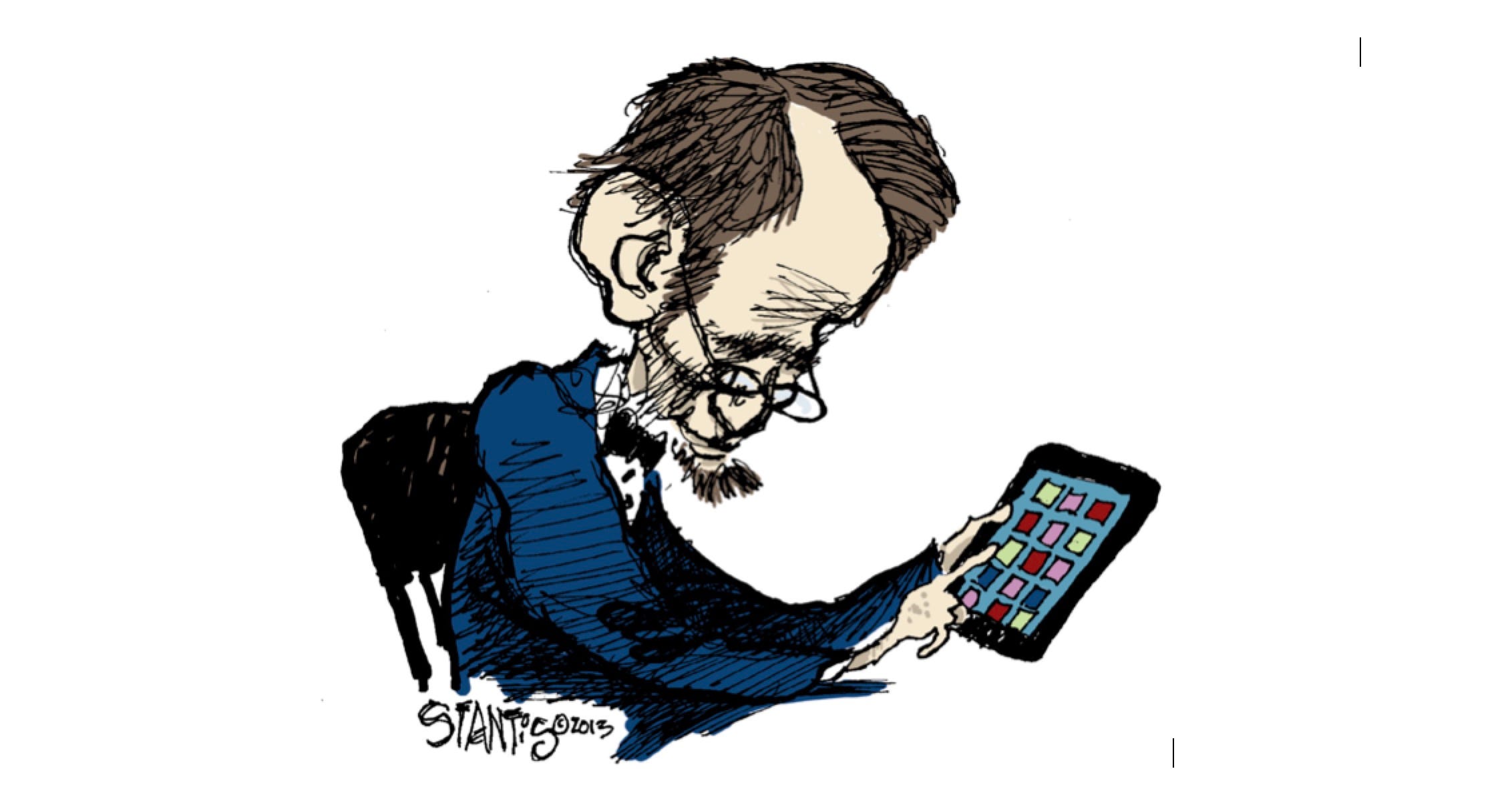
“The truth about TIFs: Chicago’s secret property tax hikes.” At “The Last Ward,” Austin Berg spells out in clear terms “how financial shell games and a loophole in state law denies Chicagoans the power to vote on their property tax bills.”
“Inside the Trump Administration’s Man-Made Hunger Crisis” (ProPublica). “Trump officials were warned repeatedly that cutting off food aid to refugees in Kenya would lead to violence and death. They did so anyway, and thousands starved.”
“Bingeworthy” proprietor Samantha Hodder is out with another year-end list, this one of 18 podcast recommendations from 2025.
Former Justice Department special counsel “Jack Smith tells lawmakers his team developed ‘proof beyond a reasonable doubt’ against Trump”
Squaring up the news
This is a bonus supplement to the Land of Linkin’ from veteran radio, internet and newspaper journalist Charlie Meyerson. Each week, he offers a selection of intriguing links from his daily email news briefing Chicago Public Square:
■ Jimmy Kimmel: “Rob Reiner … would want us to keep pointing out the loathsome atrocities that continue to ooze out of this sick and irresponsible man’s mouth. And so we’re going to do that over and over again until the rest of us wake up.”
■ The Hollywood Reporter: “Conan O’Brien threw a holiday party to forget a bad year. Then Nick Reiner arrived.”
■ Late-night chronicler Bill Carter: Hosts who went on the air Monday night “made four different choices in how they would deal with topical news this disturbing.”
■ But … but … the year’s not done yet! Nevertheless, fact checker Glenn Kessler has curated a list of the top 10 lies of 2025 from Trump—“a president who produces falsehoods faster than fact-checkers can catalog them.”
■ Viewers have been dinging “Saturday Night Live” over its apparent use of AI-generated imagery.
■ Stuck in a standoff with a customer service automaton? The Current newsletter offers phrases that may help you reach a human faster.
You can (and should) subscribe to Chicago Public Square free here.
Land of Linkin’ extra — reactions to Trump’s ugly social media post about the killing of Rob Reiner and his wife
“Trump’s Appalling Reiner Reaction Is a Sign of Something Deeply Wrong” — Jim Geraghty, National Review: “We will never become a better or more united country if we cannot point to indecent actions taken and statements made by those we agree with politically and say, “This is wrong. This is something that decent human beings do not do. You must do better than this. … The president of the United States is a hateful raging lunatic with all the empathy of Jeffrey Dahmer. … I’ll let you decide whether the term psychopath or sociopath better describes the president’s actions.”
Betty Bowers: “If you are a Republican and do not denounce the evil of Donald Trump gloating and making the murder of Rob & Michele Reiner all about himself, you are not a Christian. Please stop pretending.”
“Trump’s response to Rob Reiner’s death is a vile new low” — Rex Huppke, USA Today: “It is a grotesque response from a depraved man whose boundless and wholly unearned sense of self-worth long ago crowded out any sense of decency. … I can’t plumb the depths of his inner turmoil to tease out the driver of his unflagging spitefulness. But I do believe his impulse control has gotten worse. I believe he, on the whole, has gotten worse: crueler, more inflammatory, clinically devoted to revenge. None of those are good qualities in a president.”
“Donald Trump’s Remarks on the Death of Rob Reiner Are Next-Level Degradation” — David Remnick in The New Yorker; “There is a lot to unpack here, from the shaky grammar to the decorous use of ‘passed away’ to the all-caps diagnosis to the hideously gleeful sign-off: ‘rest in peace!’ Future Trump scholars will sort through the details with the necessary deliberation. But it requires no deep thinking to assess Trump’s meaning. As if to assure the country that this was no passing case of morning dyspepsia, he declared, at a press conference, later in the day (using the kingly third-person approach) that Reiner ‘was a deranged person, as far as Trump is concerned.’ … Do you know anyone quite as malevolent? At your place of work? On your campus? A colleague? A teacher? Much less someone whose impulses and furies in no small measure dictate the direction, fate, and temper of the country? Have you ever in your life encountered a character as wretched as Donald Trump?
“Our Petty, Hollow, Squalid Ogre in Chief” (gift link) — Bret Stephens, New York Times: “(Trump’s post) captures the combination of preposterous grandiosity, obsessive self-regard and gratuitous spite that ‘deranged’ the Reiners and so many other Americans trying to hold on to a sense of national decency. Good people and good nations do not stomp on the grief of others. Politics is meant to end at the graveside. That’s not just some social nicety. It’s a foundational taboo that any civilized society must enforce to prevent transient personal differences from becoming generational blood feuds.”
David A. Graham in The Atlantic (gift link): The man cannot resist making everything about himself, even if it’s the heartbreaking murder of a beloved artist in an alleged domestic dispute. If “TDS” is the tendency to become irrationally obsessed with Donald Trump and project that obsession onto everyone else, then somebody is indeed deranged, and it wasn’t Rob Reiner.
“Our ‘vile, disgusting and immoral’ president hits a new low, but probably not rock bottom” — Picayune Plus: Most of us already knew that Trump is a low-class sociopath with barely a shred of human decency in him. Yet still he manages to surprise and disgust us anew, and I’m sure that as low as Monday’s post was, he’ll go even lower soon enough.
Media notes

A tip of my press fedora to last Sunday’s issue of the Sun-Times. The lead story “Greg Bovino’s the star of Trump’s deportation show. We trace his roots” was an ambitious, six-page deep dive into the life of the belligerent leader of the U.S. Border Patrol’s regional surge campaigns in which Chicago Public Media reporters Dan Mihalopoulos (WBEZ) and Lauren FitzPatrick (Sun-Times) and photographers Candace Dane Chambers and Anthony Vazquez (Sun-Times) traveled the country for a revealing profile. Their work gained added relevance when Bovino and his Border Patrol troops showed up in the Chicago area again Monday and began rounding up the “worst of the worst” brown-skinned people, such as Federico Diaz, an elderly tamale vendor in the Back of the Yards neighborhood.
After that, in the paper came an investigative report “Ignored, misdiagnosed, left to die — Illinois prisoners’ health in hands of new provider with shoddy track record” by Kaitlin Washburn, and “Chicago’s head tax was long called a job killer, but is there evidence to back that up?” by WBEZ reporters Mariah Woelfel and Amy Qin. (Short answer: Not really.)
Kimbriell Kelly took over in September as Chicago Public Media’s editor in chief and deserves credit for enhancing the vitality of the operation.
Also …
Division Street Revisited, a podcast hosted by former Tribune columnist Mary Schmich that re-examined the lives of some of the Chicagoans Studs Terkel interviewed for his 1967 oral history book “Division Street,” made the list of the nine best podcasts of the year at “The Conversation.”
The 100 best photos of 2025 by Chicago Tribune photographers (gift link)
Disclosure: My wife is on temporary assignment as a news editor at WBEZ.
Quotables
A collection of compelling, sometimes appalling passages I’ve encountered lately
In my 15 years of reporting as a journalist on medical aid in dying (MAID) laws around the country, I have always asked opponents for evidence of abuse or coercion of patients under these laws, and have carefully followed up on their claims. But I have found no credible evidence of such abuse or coercion. Other journalists also have found that these claims have not held up to scrutiny. As I reported last year in Chicago Magazine, the longtime executive director of Disability Rights Oregon wrote in 2019 that his agency had never received a complaint about coercion since Oregon became the first state to permit MAID in 1997. — Harris Meyer
We have an administration that is corrupt, incoherent, chaotic, cruel. … What is this guy doing for the American people? It just ain’t there, except giving tax cuts to the richest people in America while he cuts millions of people out of Medicaid, while he cuts half a trillion dollars out of Medicare. … I think that’s sick. — Nancy Pelosi
Those making (the Epstein case) a partisan issue have lost their souls. This transcends politics. It’s about the inhumanity visited upon these young victims by perverse men of wealth and position. I don’t care what side of the aisle you’re on. All must finally be held accountable. — Mosa
Starting the day I take the oath of office, I will rapidly drive prices down, and we will make America affordable again! — Donald Trump
Inflation is as high today as it was the day (Trump) took office. His signature economic initiative—the steepest tariffs on imported goods since the Great Depression—has, predictably, increased costs for American consumers. Job growth has slowed this year. — David Axelrod
The American people can’t afford to go to the doctor of their choice while we enrich insurance companies. … Republicans will complain about it, and then they’ll offer milquetoast garbage like we’re offering this week and then go home at Christmas and say, “Look at what we’re doing. We’re campaigning on reducing healthcare!” Well, congratu-friggin’-lations. At some point, people will look at this body and say, “Maybe we should get rid of all 435 members of the House and all 100 members of the Senate and start over because Congress is literally failing the American people.” — U.S. Rep. Chip Roy, R-Texas

Trash talkin’ Chicago garbage blues
Cate Plys, Chicago historian, journalist and member of “The Mincing Rascals” podcast panel wrote a powerful Tribune op-ed last week — “How Mayor Brandon Johnson can help the budget and make the city’s trash fee more equitable” (gift link) — that was cited approvingly in on of the newspaper’s editorials Wednesday. Here she offers a bit of trashy local lore:
The biggest mystery about how retiree Anthony Kantowski lost $40,000 in 1976 is why, in the name of all that is holy in Chicago, he did not have a garbage can. A garbage can could have saved him.
There are more mysteries in this story, but that’s the biggest, because Anthony Kantowski was a lifelong Bridgeport resident who lived at 3339 S. Carpenter, a short walk from Mayor Daley’s house.
And Mayor Daley practically built his Chicago Democratic Machine on a foundation of garbage cans by relentlessly campaigning for a clean Chicago, then adding more and more garbagemen to the city payroll. These workers, who owed their jobs to the Machine, then helped get out the vote. Chicago was still using four garbagemen for one garbage truck in the 1980s when other cities had already gone down to three or two. The Department of Streets and Sanitation somehow needed separate foremen for the garbage truck drivers and the garbage truck laborers.
Mayor Daley also continued a cherished Machine custom: Chicago voters got free garbage cans from their alderman, stenciled with the politician’s name so the citizen would remember who to vote for.
I bet Mayor Daley would have been furious to hear that his neighbor lost his life savings because the 11th Ward Democratic Organization didn’t give him a garbage can. Alas, Mayor Daley was busy in New York at the 1976 Democratic convention. Anthony Kantowski was on his own.
Mr. Kantowski’s $40,000 would be $233,600 in 2025 money. He’d righteously earned every penny of it working 45 years as a paint mixer after dropping out of school to help his widowed mother and serving in World War II.
This is the guy who was setting up to cook a mess of chicken necks he’d gotten on sale in Indiana, on a sunny warm July afternoon in 1976, when two city workers knocked on his door. The missing garbage can was a code violation, they said, and offered a free one. They just needed Kantowski to show them his gangway, so they could measure it for the new can.
Of course, the two men were not city workers. They were con men, in the midst of preying on elderly South Siders. Maybe they stole Kantowski’s garbage can as part of the sting. While they “measured” for a new can, an accomplice snuck into Kantowski’s backyard and took a metal box off a shelf on his back porch.
The box held $40,000 in small bills.
Second mystery: Why did Kantowski keep his life savings in a metal box on the back porch? He told police he had taken it out of the bank because he didn’t want to pay taxes on the interest.
Luckily, Kantowski got a halfway happy ending. A neighbor who identified himself as a gypsy soon brought police half the missing money, saying it was “raised by sympathetic Gypsies and other persons” to replace the stolen savings.
For more on Chicago garbage cans, Mayor Daley’s Clean Up Chicago campaign, and how Council Wars waded into the city’s trash, check out the full post at Roseland Chicago, 1972.
Rest assured, meanwhile, that Anthony Kantowski promised to put his recovered $20,000 in the bank.

Cheer chat — season finale
A report from Mary Schmich about the “Songs of Good Cheer” winter holiday singalongs at the Old Town School of Folk Music in Lincoln Square that Mary and I hosted over last weekend:
Thank you to everyone who joined us for Songs of Good Cheer this year. Year after year — 27 of them now — these shows buoy my spirits.
I love the musicians who bring their talent and energy to the stage and let a couple of amateurs — Eric Zorn and me — play with them.
I love the audience, though the word “audience” doesn’t do justice to the people who fill those seats and sing their hearts out. They — you — are also the music makers. At Songs, everyone in the room is in the band, and everyone’s got talent.
I love living in a city — the great city of Chicago — that contains the Old Town School of Folk Music. The school’s intimate, beautiful performance hall is a refuge from whatever madness is swirling in the world — though refuge doesn’t do justice to what happens in that room.
Those gatherings in that space are more than a refuge. They’re as real as what happens in “the news,” a reminder that the world is more than “the news.” We are not the sum of our madnesses. We are our singing and our laughing and our remembering and our hugging and our communion with friends and strangers. Let’s never forget that we are that, too.
The most powerful song we did this year was called “Chariots,” which Eric brought to the group. Alas, I don’t have a video of Eric leading it, but here’s one of the verses that sticks with me:
As a candle can conquer the demons of darkness
As a flame can keep frost from the deepest of cold
So a song can give hope in the depths of all danger
And a line of pure melody soar in your soul
So sing your songs well and sing your songs sweetly
And swear that your singing it never shall cease
So the clatter of battle and drums of disaster
Be drowned in the sound of the pipes of peace.
Keep singing, my friends.
I learned “Chariots” from the singing of John Roberts and Tony Barrand on the wonderful “Nowell Sing We Clear” recordings. Watch this space next fall for ticket announcements for SOGC 28.
Quips
There was no visual jokes contest this week — I didn’t have a set that met my (some say low) standards for funny. If you see some worthy nominees, please email them to me!
The new nominees for Quip of the Week:
I’m starting to suspect the Christmas tradition of the kids cleaning the house for Santa while the parents nap is just something my parents made up. — @johnlyon.bsky.social
He’s making a list. He’s checkin’ it twice. He left it at home. He’s texting his wife. — @ThePunnyWorld
Any Christmas song sung plaintively in a minor key by a female voice over a piano playing only one note at a time (or a slowly winding music box) is horror movie fodder. — @jakevig.bsky.social
If Santa knows when I’m awake, why, exactly, does he need to see me when I’m sleeping? — @roastmalone.bsky.social
Recreate the magic of “A Christmas Carol” for an elderly relative by waking them repeatedly to tell them where they’ve gone wrong in life. — @Dempster2000.bsky.social
I don’t care what she says, if all you get her for Christmas is you, she’s going to be pissed. — @bestestname
My thousand-yard stare is not the result of some deeply buried trauma. I’m just trying to pee in your pool. — @saltymactavish.bsky.social
Sure, S’mores appear to be a good idea on paper. But in the real world you end up holding a sticky pointless mass that defies God’s will. — @jakevig.bsky.social
I like to have one nacho, then another, then two, then three and so on in the Fibonacho sequence. — @los-los.bksy.social
I’ve got 50 minutes to make it look like I’ve been flossing for the last six months. — @megansarahj
Vote here and check the current results in the poll.
For instructions and guidelines regarding the poll, click here.
Minced Words
Marj Halperin, Austin Berg and I joined host John Williams on this week’s episode of “The Mincing Rascals” podcast. We discussed the return to the area of Border Patrol troops, President Donald Trump’s increasingly odd behavior, the Chicago budget fight and medical aid-in-dying laws.
Traffic lights:
John — A yellow light for “Jay Kelly,” the George Clooney/Adam Sandler film now streaming on Netflix.
Marj — A green light for Waterpiks.
Austin — A green light for “Charlie Dark on Theo Parrish” on YouTube.
Eric — A green light for “Pluribus” on Apple TV based on having only watched half of season one.
Subscribe to us wherever you get your podcasts. Or bookmark this page. If you’re not a podcast listener, you can hear an edited version of the show at 8 p.m. most Saturday evenings on WGN-AM 720.
Read the background bios of some regular panelists here.
Green Light
Green Light features recommendations from me and readers not only of songs — as in the former Tune of the Week post — but also of TV shows, streaming movies, books, podcasts and other diversions that, with only rare exceptions, can be enjoyed at home.
We opened “Songs of Good Cheer” this year with a song whose title felt particularly resonant: “We Need a Little Christmas.”
It was written by composer/lyricist Jerry Herman for the 1966 Broadway musical “Mame,” an adaptation of the 1955 novel “Auntie Mame” by Patrick Dennis. Both are set in the 1920s. When the character Mame and her fiancé lose their fortune in the 1929 Wall Street Crash, Mame (originally played by Angela Lansbury, then in her early 40s), she sings “We Need a Little Christmas” to boost everyone’s spirits.
For we need a little music
Need a little laughter
Need a little singing
Ringing through the rafter
And we need a little snappy
‘Happy ever after'
Need a little Christmas now
As Mary Schmich pointed out to our audience, there is a darker moment in the lyrics:
For I’ve grown a little leaner
Grown a little colder
Grown a little sadder
Grown a little older
That sums up 2025 for many people (particularly those growing leaner on GLP-1s), and we do need more than a little Christmas (or winter holiday observance of your choice) now.
Lansbury went on to greater fame playing mystery writer/sleuth Jessica Fletcher from 1984 until 1996 on the CBS TV series “Murder, She Wrote.” She died in October 2022, five days short of her 97th birthday.


Mistakes were made
When I become aware of errors in the Picayune Sentinel, I quickly correct them in the online version, but since many of you read just the email version, which I can’t correct after the fact, I will use this space periodically to alert you to meaningful mistakes I’ve made. (Not typos, in other words.)
In the Nov. 9 Picayune Plus, I erred when relaying the rules regarding the signing of nominating petitions for political candidates. It had long been my understanding — and indeed I’m sure I’ve written of it before — that once a voter signs a petition to help a candidate get on the primary ballot for a particular office, if that voter later signs a petition for another candidates for that same office, the subsequent signature does not count.
In fact, this is true only for petitions for independent candidates or candidates running under the banner of a new party. If there are multiple candidates hoping to get on the Democratic primary ballot in a state legislative race, for example, you can sign for all of them, and each signature will count toward the total number of signatures needed to get on the ballot. But you may not also then sign for Republican or independent hopefuls in the same primary. And you may sign for only one independent/new-party candidate.
My explanation for how I made this error — not an excuse! — is that the so-called “spent signature” rule applies to nonpartisan mayoral and aldermanic elections in Chicago, where I live and vote. Once I sign a nominating petition for one aldermanic or mayor hopeful, my nominating privileges for that office are considered “spent.”
That makes sense. Nominating someone for an office is an expression of support for that candidate, and it’s somewhat incoherent to express support for more than one candidate when you are allowed just one vote in the election itself. The only way it makes sense is you are of the “more the merrier” school of thought when it comes to ballot access.
And indeed, Illinois is an outlier in allowing voters to sign for multiple candidates of the same established party for the same office. I should have known that and did not, especially when writing about the fate of a candidate in the partisan race for a seat on the Cook County Board of Review.
The actual law invalidated a portion of my argument that “asking incumbents to pass petitions makes it harder for challengers to get on the ballot,” which is definitely and significantly not true when it comes to partisan elections in Illinois.
The Picayune Sentinel regrets the error.
Info
I am a former opinion columnist for the Chicago Tribune. I began publishing the Picayune Sentinel on Sept. 9, 2021, roughly two and a half months after I took a buyout from the newspaper. Find a longer bio and contact information here. This issue exceeds in size the maximum length for a standard email. To read the entire issue in your browser, click on the headline link above. Paid subscribers receive each Picayune Plus in their email inbox each Tuesday, are part of our civil and productive commenting community and enjoy the sublime satisfaction of supporting this enterprise. Browse and search back issues here.
Contact
You can email me at ericzorn@gmail.com or by clicking here:
I read all the messages that come in, but I do most of my interacting with readers in the comments section beneath each issue.
Some of those letters I reprint and respond to in the Z-mail section of Tuesday’s Picayune Plus, which is delivered to paid subscribers and available to all readers later Tuesday. Check there for responses.
If you don’t want me to use the full name on your email or your comments, let me know how you’d like to be identified.
Social media
Facebook: https://www.facebook.com/ejzorn
Twitter: https://x.com/EricZorn
Threads: https://www.threads.net/@ejzorn
Help?
If you’re having troubles with Substack — delivery, billing and so forth — first try “Picayune Sentinel Substack help, Frequently Asked Questions.” If that doesn’t work check out the Substack help page. And if that doesn’t work, shoot me an email and I’ll be happy to help.
Thanks for reading!
If Santa knows when kids are naughty or nice then he knew Rudolph was being bullied.
Climate change? Doesn't exist and anyway there is nothing we can do about it. Mass shootings? Done by Islamic maniacs and mentally ill people with a constitutional right to have WMDs and anyway there is nothing we can do about it. Mass migration? Evil brown people bent on destroying the Judeo-Christian way of life and anyway there is nothing we can to change its causes. Internet use by children distorting their social lives? No answer to that one. Happy holidays to all in the United States of Apathy.